
Skip to content

Custom Asset Tracking Software

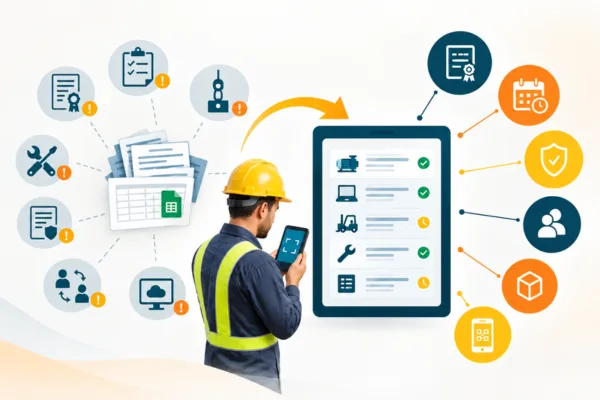
Asset tracking fails for the same reason in most businesses: the register exists, but it is a spreadsheet that reflects reality only at the moment of the annual audit. Between audits, equipment moves, custody changes, maintenance falls due, warranties lapse, and none of it gets recorded because recording it is inconvenient. Custom asset tracking software solves the problem by making capture easy at the point it happens β€” a QR scan on a phone β€” and by matching your actual asset categories, custody rules, and maintenance requirements rather than a generic product’s assumptions.

Why Generic Asset Tracking Products Fall Short?

Why Generic Asset Tracking Products Fall Short?

Packaged asset tracking products are built around a common denominator: an asset has an ID, a location, a value, and a depreciation schedule. That model works until your assets need to carry information the product has nowhere to hold. Calibration certificates with expiry dates on test equipment. Statutory inspection records on lifting gear or pressure vessels. Custody chains on tools issued to named technicians and returned. Consumable components tracked against a parent asset. Warranty and AMC contracts with different terms per supplier. Assets that belong to one entity but are deployed at another’s site. Software licences with renewal dates and seat counts alongside physical hardware.

When the product cannot hold these, they move into a parallel spreadsheet — and the asset register becomes a partial record that nobody fully trusts. A custom application built on Zoho Creator holds whatever your assets actually need to carry, enforces the workflow your process requires, and captures data through a mobile scan rather than a form somebody has to remember to fill in later. That combination is what makes an asset register stay accurate between audits instead of only during them.

Business Challenges We Solve

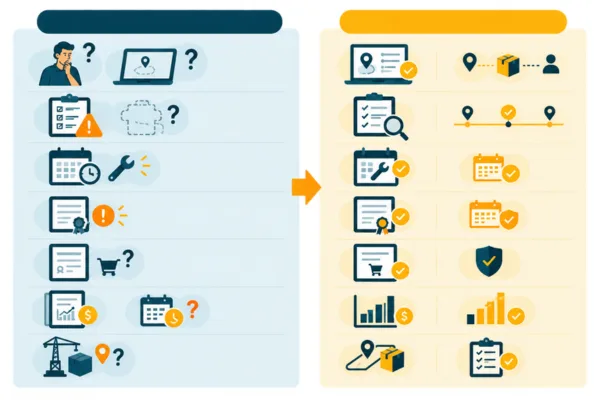
The problems businesses describe are practical rather than abstract. Nobody can say where a specific item currently is or who has it. Assets are discovered missing at audit, months after they actually disappeared, with no custody trail to investigate. Preventive maintenance is missed because the schedule lives in someone’s calendar rather than in the system. Calibration and statutory inspection certificates expire unnoticed, creating a compliance exposure that only surfaces during an inspection. Warranty claims are lost because the purchase date and supplier terms are not recorded against the item. Depreciation schedules are maintained separately by finance, so the asset register and the fixed asset ledger disagree. Assets deployed to project sites are not reconciled when the project closes.

Business Challenges Techvaria Solve

How We Solve This

The solution combines three things. First, a data model built for your asset categories β€” each with the fields that category genuinely requires, rather than a single flattened structure. Second, capture at the point of activity: QR or barcode labels scanned on a mobile phone to record movement, custody transfer, inspection, or condition, working offline where sites have no connectivity. Third, scheduled logic that pushes rather than waits β€” maintenance due alerts, certificate expiry warnings, warranty expiry notices, and overdue custody returns raised automatically to the responsible person. Zoho Creator provides all three, and integrates with Zoho Books where asset values and depreciation need to align with the financial records.

Asset Register with Category-Specific Fields

Separate field structures per asset class, so IT equipment carries specifications and licence data, plant carries capacity and inspection records, and vehicles carry registration and insurance β€” without forcing everything into one flat schema.

QR and Barcode Mobile Scanning

Labels generated from the system and scanned by a mobile application to record movement, custody change, inspection, or condition β€” with offline capture that syncs when the device reconnects.

Custody and Assignment Tracking

Full chain of custody for every asset: who has it, since when, at which location, and what the return expectation is β€” with overdue return alerts raised to the holder and their manager.

Preventive Maintenance Scheduling

Maintenance schedules by time interval or usage metric, generating work orders automatically, tracking completion with technician and parts detail, and holding the full service history against the asset.

Certificate and Compliance Expiry Alerts

Calibration certificates, statutory inspection records, insurance, and warranty documents attached to the asset with expiry dates, and escalating alerts raised before lapse rather than after.

Depreciation and Financial Alignment

Depreciation schedules by asset class with book value calculated over time, aligned with the fixed asset ledger in Zoho Books so the operational register and the financial records agree.

Multi-Location and Multi-Entity Structure

Assets tracked across sites, branches, and legal entities, with reporting available per location or consolidated, and transfer workflows recording movement between them.

Audit Trail and Physical Verification

Every change recorded with user and timestamp, plus a scan-based physical verification mode that reconciles the register against what is actually found on site and reports the variance.

Zoho Applications We Use for This

The application is assembled from the Zoho products below, with Creator carrying the asset register, the custody workflows, the mobile scanning and the alerting logic.

Zoho Creator
Zoho Creator

The core application: asset register, custody workflows, maintenance scheduling, mobile scanning, and alerting logic.

Zoho Books
Zoho Books

Fixed asset ledger alignment, depreciation posting, and purchase records linking assets to their acquisition documents.

Zoho Inventory
Zoho Inventory

Where spare parts and consumables consumed in maintenance need stock control alongside the asset record.

Zoho People
Zoho People

Employee master data driving custody assignment and the reporting hierarchy used for overdue return escalation.

Zoho Desk
Zoho Desk

Where asset faults are raised as support tickets and need to link back to the asset’s service history.

Zoho Analytics
Zoho Analytics

Fleet-level reporting: utilisation, maintenance cost per asset, downtime analysis, and lifecycle cost comparison.

Where This Applies?

This applies wherever the value or compliance exposure of physical assets justifies tracking them properly. Manufacturing operations tracking plant, tooling, and calibrated test equipment with statutory inspection requirements. Construction and contracting businesses managing plant and tools issued across multiple active sites, where custody and site transfer are the main sources of loss. Healthcare and laboratory operations with calibration certificates and service records that carry regulatory weight. IT and facilities teams tracking hardware, licences, and infrastructure across offices with custody assigned to individuals. Logistics and fleet operators tracking vehicles, trailers, and handling equipment with service schedules and registration renewals. Educational institutions managing laboratory equipment, IT assets, and furniture across departments and campuses.

It applies with particular force to businesses with assets deployed away from a central location β€” site-based plant, field equipment, tools issued to technicians β€” because these are where spreadsheet registers fail fastest and where the cost of loss is highest.

It also applies where an asset register already exists but is not trusted. Rebuilding trust in an asset register is largely a matter of making capture effortless enough that it actually happens, and then running a scan-based physical verification to establish a reliable baseline. That verification exercise is often the most valuable early output of the project.

Ready to Build an Asset Register You Can Trust?

A consultation covers your asset categories, the information each needs to carry, how movement and custody actually work in practice, what maintenance and compliance requirements apply, and how the register should align with your financial records. We scope the application, the labelling approach, and the mobile requirement, and give you a realistic timeline. Most asset tracking builds reach production within four to eight weeks.
Why Choose Techvaria for Custom Asset Tracking?

Why Choose Techvaria for Custom Asset Tracking?

Techvaria is a Zoho Premium Partner building custom operational applications on Zoho Creator for clients across India and the UAE. Asset tracking is a category where the details decide whether the system gets used — whether capture is fast enough on a phone, whether it works without signal, whether alerts reach the right person, and whether the register reconciles with finance.

We design for those specifics rather than delivering a generic register, integrate with Zoho Books where financial alignment matters, and document the build so it stays maintainable as your asset base grows.

Hear From Our Clients

Industries We Serve

Frequently Asked Questions

Because most asset registers fail on the fields and workflows a generic product cannot hold — calibration certificates, statutory inspections, custody chains, entity ownership versus deployment location, or component tracking against a parent asset. When those move to a spreadsheet, the register stops being complete. A custom build holds what your assets actually need to carry. Where a packaged product genuinely fits your requirement, buying it is the cheaper answer and we will say so.

Yes. Labels are generated from the system and scanned using a standard mobile phone camera through the Creator mobile application — no dedicated scanning hardware is required, though industrial scanners can be used where the environment demands it. Scanning drives movement recording, custody transfer, inspection capture, and physical verification.

Yes. The mobile application supports offline data capture. Technicians and site staff record movements, inspections, and condition without signal, and the records sync when the device reconnects. This matters for construction sites, remote plant, and warehouse interiors where connectivity is unreliable.

Yes. Schedules can be defined by time interval or by a usage metric such as running hours or kilometres. The system generates work orders when maintenance falls due, tracks completion with technician, parts, and cost detail, and retains the full service history against the asset. Overdue maintenance escalates automatically.

Asset records link to their purchase documents in Zoho Books, and depreciation schedules by asset class produce book values that align with the fixed asset ledger. This removes the common problem of the operational register and the finance register disagreeing, which typically arises because disposals and additions are recorded in one and not the other.

Yes. Assets carry both an owning entity and a current location, which is important for businesses that deploy equipment owned by one entity at another’s site. Transfers between locations are recorded as workflow events with approval where required, and reporting is available per location, per entity, or consolidated.

Four to eight weeks for most implementations, covering the register, custody workflows, maintenance scheduling, mobile scanning, and alerting. The variables are the number of distinct asset categories with different field requirements, integration with financial records, and whether an initial physical verification exercise is included to establish an accurate baseline.

Existing spreadsheet data is cleaned, structured, and migrated as part of the build. Where the existing data is known to be unreliable, we recommend a scan-based physical verification after go-live to establish an accurate baseline. This is usually the point at which the register becomes genuinely trustworthy, and it is worth planning for rather than discovering later.

Resources

Latest Blogs